Health & Safety Policy — House Clearance Tunbridge Wells
This health and safety policy sets out the principles and practical arrangements that govern how our house clearance and rubbish removal teams operate across the service area. It applies to all employees, contractors and subcontractors engaged in house clearance, waste removal and rubbish collection activities. The policy is designed to reduce risk, protect people and the environment, and ensure that our clearance operations meet statutory obligations and best practice for a rubbish company service area.Policy scope and objectives
Our objectives are to maintain a safe working environment during house clearances and to manage waste responsibly when operating as a domestic and commercial rubbish clearance provider. We commit to preventing injury and ill health, minimising environmental impact and ensuring consistent standards across the service area. This policy covers site assessments, manual handling, hazardous items, vehicle safety, and interaction with third parties such as occupiers and site managers.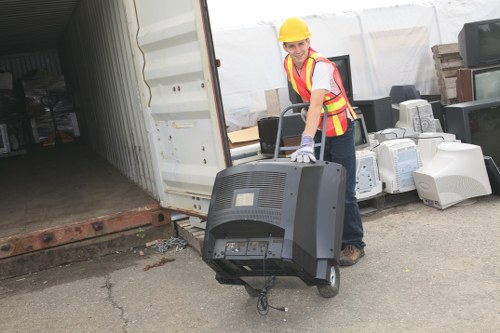 Key aims include:
- Risk reduction: Identify and control risks before work begins.
- Safe systems: Implement procedures for safe rubbish removal and house clearance work.
- Training: Ensure staff are competent in waste handling, lifting techniques and the use of PPE.
- Incident reporting: Report, record and investigate accidents and near misses.
Responsibilities and roles
Everyone involved in house clearance operations has a role to play. Management will provide leadership, resources and oversight; supervisors will ensure work is planned and risk-assessed; operatives will follow procedures and use equipment correctly. Employees must take reasonable care of their own health and safety and cooperate with safety measures. Contractors are required to adhere to the same standards while working on behalf of the rubbish company. Risk assessment and planning are central to safe rubbish clearance. Prior to every job a formal assessment will be completed that checks access, structural hazards, sharps, chemical containers, asbestos risk, vermin and fire hazards. The assessment will determine the method of work, the level of supervision, required PPE and if specialist disposal is needed. Where necessary, items that present a high risk will be isolated and referred for specialist handling.
The policy emphasises manual handling controls and mechanical aids. Teams use trolleys, sack trucks and lifting aids to reduce strain. Staff receive regular training on correct lifting and loading to avoid musculoskeletal injury. As a rubbish collection and clearance operator, we limit individual loads and rotate tasks to minimise repetitive strain.
Personal protective equipment and vehicle safety are compulsory. Operatives are supplied with gloves, high-visibility clothing, safety boots, eye protection and respirators where applicable. Vehicles used for collections are maintained to a safety standard and are inspected prior to use. Loads are secured to prevent shifting, and vehicle access points are kept clear to avoid slips, trips and falls during loading and unloading.
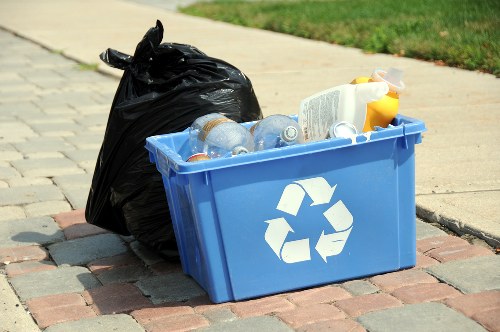 Waste segregation and disposal follow a waste hierarchy that prioritises reuse and recycling ahead of disposal. Hazardous materials (such as batteries, solvents, asbestos-containing materials) are identified during the pre-clearance survey and handled per relevant regulations. Documentation and waste transfer notes are produced for controlled wastes, and contractors follow established disposal routes to authorised facilities within the service area.
Emergency procedures and first aid are documented and communicated. All operatives know how to summon assistance and where first-aid supplies are kept. In the event of a spill or contamination incident, containment and reporting procedures are enacted immediately. The company maintains adequate insurance and supports employees through incident investigations with the aim of preventing recurrence.
Monitoring, review and continuous improvement ensure the policy remains effective. Regular audits, toolbox talks and performance reviews identify opportunities for improvement in the rubbish clearance process. Lessons learned from incidents inform training updates and procedural changes. The company encourages reporting of near misses and unsafe conditions without fear of reprisal.
 Compliance with applicable health and safety legislation and industry standards is a core requirement. While specific local details are minimised on this legal page, the organisation adheres to national regulations covering waste management, vehicle operation and occupational health. Records of training, risk assessments, vehicle inspections and waste transfers are maintained and made available for inspection as required.
Conclusion: This health and safety policy for house clearance and rubbish removal provides a framework to protect staff, customers and the wider community. The company will review this policy periodically and update it to reflect changes in legislation, operational practice and the needs of the service area. By following these controls — from pre-clearance surveys to safe loading, segregation and disposal — we aim to deliver a safe, reliable and responsible rubbish clearance service for every job.
